
IoT Solutions
Connect machines, sensors and devices to software — live monitoring, alerts and remote control from a dashboard or phone.
The Internet of Things is simple in principle: a device measures something, sends it somewhere, and someone acts on it. Making that reliable — across hundreds of devices, weak connections and real users — is the hard part, and that is what we build.
We work across the whole chain: the device and its firmware, the cloud backend that collects the data, and the dashboards and apps people use.
What we have built
- [GenTrack](/projects/gentrack): live monitoring of 500+ rental generators across Egypt — location on a map, fuel anomaly detection, remote device management and a cloud ERP for the rental business, with custom hardware on each unit.
- [Smart Balance](/projects/smart-balance): a Raspberry Pi scale that streams live weight readings to a mobile app.
What an IoT system includes
- Hardware and firmware: sensors, controllers and the code that runs on them.
- Connectivity: cellular, Wi-Fi or local networks, with data buffered when the connection drops.
- Cloud backend: secure device registration, data storage and processing.
- Dashboards: live maps, charts and status for each device.
- Alerts: when a reading crosses a threshold, a device goes offline or behaviour looks wrong.
- Remote management: configure and control devices without a site visit.
- Mobile apps for field teams and customers.
Where IoT pays off
- Rental and fleet: know where every asset is and how it is being used.
- Energy and fuel: catch theft and waste early.
- Cold chain and storage: temperature and humidity monitoring with alerts.
- Facilities and factories: machine status, counts and downtime.
For Saudi and UAE businesses
An IoT system is run from its dashboard, so the devices can be in Riyadh or Dubai while we build and support the software from Cairo. We start with a few devices to prove the readings and alerts, then scale; the hardware is designed for the project or integrated with what you already have. Our guide to hiring an Egyptian software company from the Gulf covers how remote delivery works; see also our pages for Saudi Arabia and the UAE.
How an IoT project runs
Every IoT project goes through the same five stages, and it starts small:
- Discover. We look at the assets you want to monitor, what you need to know about them, where they are and what connectivity is available on site.
- Plan. We choose the sensors, the hardware for each unit, how it connects (cellular, Wi-Fi or a local network) and which alerts matter, and agree it in writing.
- Design. We design the dashboard, the alerts and, if needed, the mobile app around the people who will act on the data.
- Build. We start with a pilot on a few devices to prove the readings and alerts in real conditions. You see a working build every one to two weeks.
- Launch. Once the pilot works, we roll out across the fleet, monitor the system and keep improving it.
What an IoT project costs
Projects start from $200 (about SAR 750 / AED 735), and the final price depends on scope, with a fixed written quote after a free call. For IoT, these are the main things that drive the price:
| Cost driver | Why it matters |
|---|---|
| Number of devices | More units means more hardware, more installation work and more data to handle. |
| Hardware | Custom hardware on each unit costs more than reading sensors you already have. |
| Connectivity | Cellular devices each need a SIM and a data plan; Wi-Fi or a local network may not. |
| Cloud running costs | Storage and processing grow with the number of devices and how often they report. |
| Software scope | A dashboard with alerts is smaller than a dashboard, a mobile app and an ERP. |
Hardware is a per-unit cost, and SIMs and cloud hosting are monthly costs on top of the software build, so the pilot also gives you real numbers for what a full rollout will cost to run. Read more on how IoT reduces operating costs and connecting IoT devices to the cloud.
What you get at handover
- Your code and accounts: the source code for the firmware, backend, dashboard and app, and the cloud and domain accounts, are yours.
- Deployment where you choose: we deploy the backend to the hosting provider and region you choose.
- Documentation of the devices, the data they send and how the system is set up.
- Maintenance and support after launch: monitoring, fixes, software and firmware updates, and new features as the fleet grows.
Frequently asked questions
Do you supply the hardware?
We design and assemble the device setup for the project, or integrate with hardware you already have, depending on what the project needs.
What happens when a device loses connection?
Devices store their readings and send them when the connection comes back, and the dashboard shows which devices are offline.
Can we start with a few devices?
Yes. We usually start with a pilot on a small number of devices, prove the value, then roll out across the fleet.
How long does an IoT project take?
It depends on the scope: how many devices, whether the hardware is custom, and what the software needs to do. We share a realistic timeline before we start, and the pilot on a few devices comes first, so you see real readings early.
Where is the device data stored, and who owns it?
In a cloud account in your name, with the hosting provider and region you choose. The data, the source code and the accounts are yours.
Can you take over or extend an existing IoT system?
Yes. We can audit the devices, firmware, backend and dashboards you already have, fix what is broken, then extend and maintain the system.
Work we've delivered
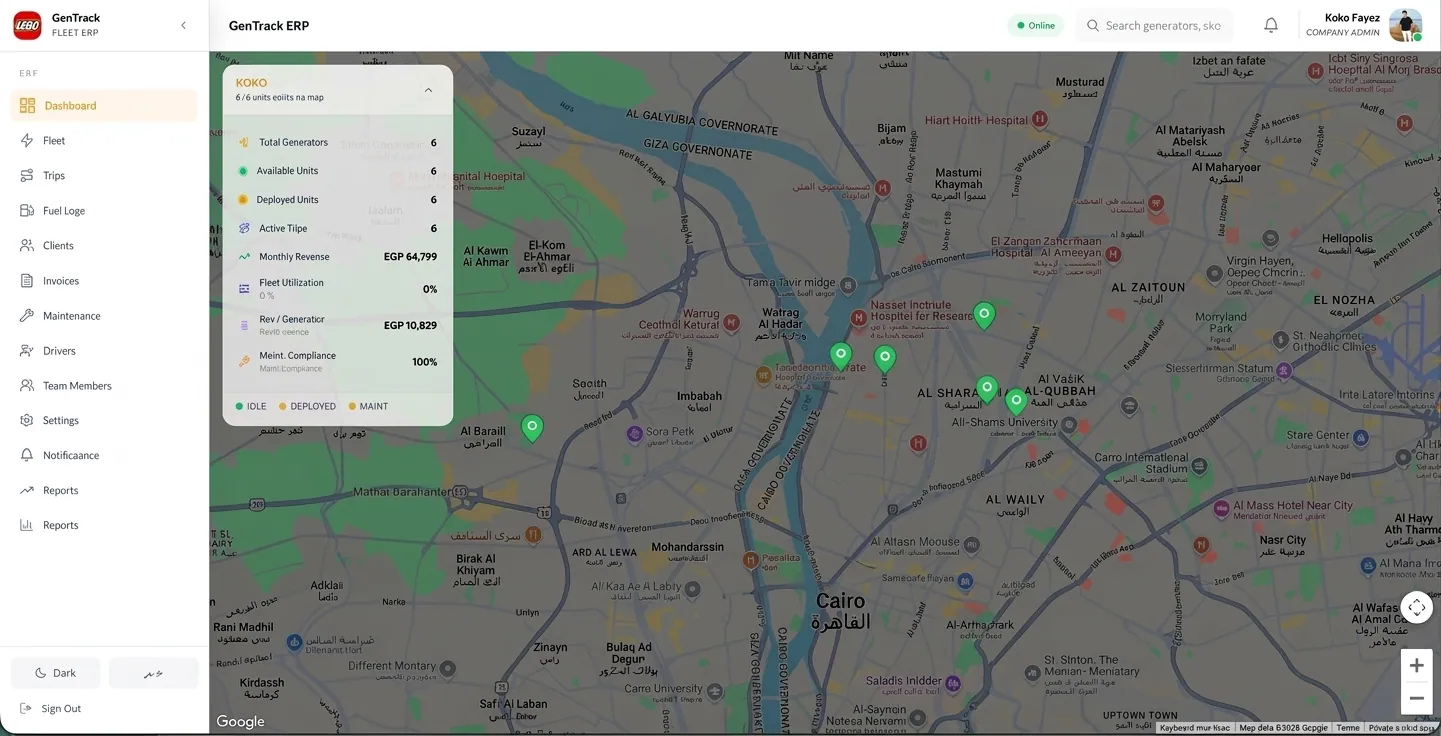
GenTrack
Multi-tenant SaaS for generator rental companies in Egypt — the first local solution combining real-time IoT monitoring of 500+ generators, fuel-anomaly detection, remote device management, and a cost-optimized cloud ERP with web dashboard, mobile app, and custom IoT hardware.
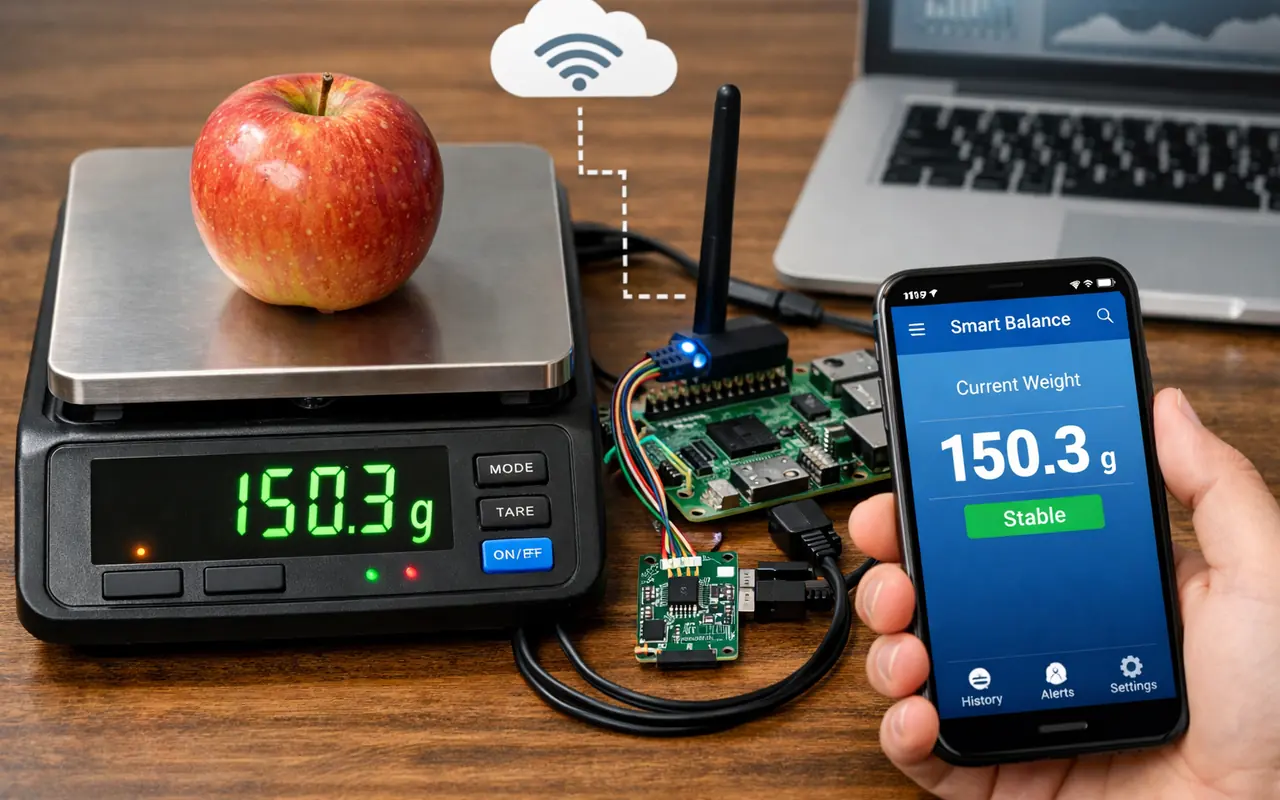
Smart Balance
Raspberry Pi-driven digital scale streaming live weight to a mobile app in real time.
Guides on this topic
Fleet tracking and management systems in Egypt
GPS devices or drivers' phones, fuel and maintenance alerts, driver behaviour and dashboards: what a fleet system in Egypt should do before you buy.
Read articleHow IoT reduces operating costs: where the savings come from
Fuel, energy, downtime, site visits and spoilage: where IoT monitoring cuts operating costs, how to measure payback honestly and why to start with a pilot.
Read articleConnecting IoT devices to the cloud: a practical guide
Connectivity, MQTT or HTTP, AWS IoT Core or Azure IoT Hub versus your own backend, offline buffering, security and hosting: how to connect devices to the cloud.
Read articleOther services
Custom Software
Business systems built around your exact requirements, not a template stretched to fit.
Web Development
Fast, responsive, conversion-focused websites and web applications.
Mobile Applications
Modern cross-platform apps for iOS and Android connected to real backends.
Business Systems
POS, inventory, HR, dashboards and internal management systems.
Automation
Replace repetitive manual workflows with smart, reliable automation.
AI Solutions
Integrate AI into real business workflows where it adds genuine value.
API & Backend
Secure, scalable APIs and backend infrastructure your product runs on.
Want something like this?
Tell us what you're building and we'll turn it into a real, working product.